Lesson 3.5
Saving when money is tight
Start with $5 a week, and save raises and refunds. 4 min read
The big ideaThe habit matters more than the amount. Start with $5 and grow it.
When every dollar has a job, saving can feel impossible. But a small amount saved every week does two things: it builds a cushion, and it makes you someone who saves. The amount can grow later.
- $5 a week is $260 a year.
- $20 a week is $1,040 a year.
- Even $260 can cover a car battery or a copay without a credit card.
Save money you haven’t met yet
It’s easiest to save money you never got used to spending. Decide now what happens to the next windfall, before it arrives.
- Raises: save at least half of every raise before your spending catches up.
- Tax refunds, bonuses and gifts: save a set share, such as half.
- A paid-off bill: when a car loan or card is gone, keep “paying” that amount into savings.
- Cut costs: a cancelled subscription can go straight to savings.
Example · The Rivera family
A 3% raise added $186 a month to the Riveras’ take-home pay. They moved $93 (half) to savings from the first paycheck and kept the other half. A year later, that’s $1,116 saved that they never missed.
If even $5 is hard right now, look for one bill to lower or one subscription to cancel first. Then save what it frees up.
Key notes
- Start small: $5 a week is $260 a year.
- Save at least half of every raise.
- Decide what happens to refunds and bonuses before they arrive.
- When a debt is paid off, keep paying that amount to savings.
A steward’s view
Being faithful with a little counts. Five dollars a week is a real start, and the habit matters more than the amount.
Do it in the app
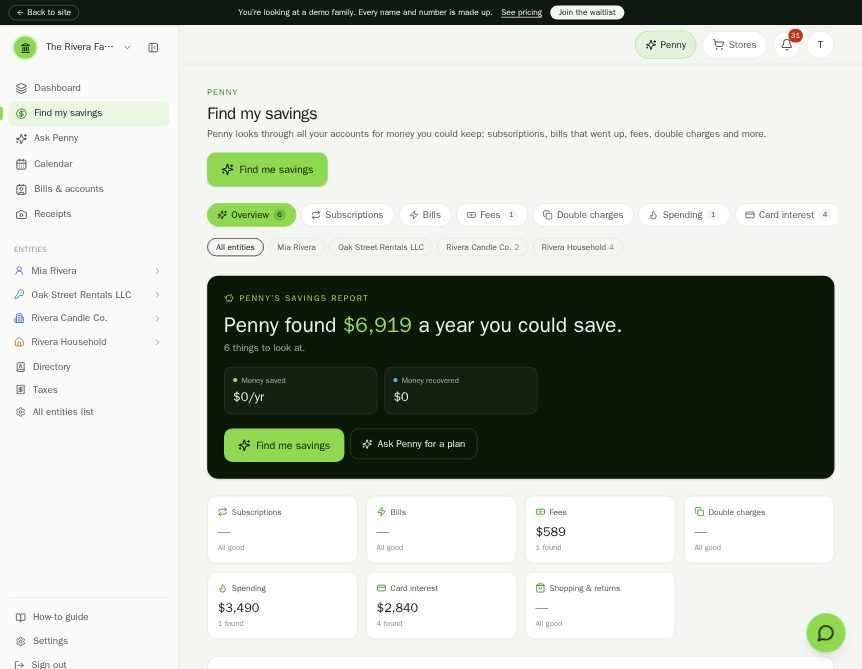
Find money to save, and count it
- 1Open Find my savings to see what Penny found: subscriptions, bills that went up, fees and more.
- 2When you act on one, tap I did it and enter what it saved, so the savings report shows money saved.
- 3Move what you freed up to savings the same day, before it gets spent.
Quick quiz
3 questions
Go deeper
- Broke Millennial, Erin LowryGetting started with money when there isn’t much of it.
- The Psychology of Money, Morgan HouselWhy a steady saving habit can matter more than income or returns.
Track this automatically in Stackyard
Connect your accounts once and Penny watches for this every time your banks sync.
For education only; not financial, tax or legal advice. Store rules, rates and tax figures change; check the source before you act.