Lesson 3.2
Your emergency fund
A starter fund first, then 3 to 6 months of expenses. 5 min read
The big ideaAn emergency fund turns a crisis into an inconvenience.
An emergency fund is cash set aside for the things you can’t plan: a job loss, a medical bill, a broken furnace. Without it, emergencies go on a credit card, and one bad month can follow you for years.
Build it in two steps
- A starter fund first: $1,000 or one month of essentials. This covers most small surprises. The $1,000 starter fund was popularized by Dave Ramsey.
- Then a full fund: 3 to 6 months of essential expenses. Essentials are what you must pay: housing, food, utilities, insurance, transportation and minimum debt payments.
Aim closer to 6 months if your income changes month to month, if one paycheck supports the family, or if you’re self-employed. Aim closer to 3 months if you have two steady incomes.
Example · The Rivera family
The Riveras’ essentials come to $4,500 a month. Three months is $13,500; six months is $27,000. They already have a $1,000 starter fund. At $620 a month, they reach three months in about 20 months.
What counts as an emergency?
Ask three questions: Is it unexpected? Is it necessary? Is it urgent? A job loss passes all three. A sale on a TV passes none. Known costs like car repairs and Christmas belong in sinking funds (the next lesson).
When you use the fund, that’s what it’s for. Then refill it before you go back to other goals.
Key notes
- Starter fund first: $1,000 or one month of essentials.
- Full fund: 3 to 6 months of essential expenses.
- Lean toward 6 months with uneven income or one earner.
- Emergencies are unexpected, necessary and urgent.
- Refill the fund after you use it.
A steward’s view
An emergency fund lets you meet hard times with calm instead of panic, and leaves room to help someone else when they need it.
Do it in the app
Size your fund and track it
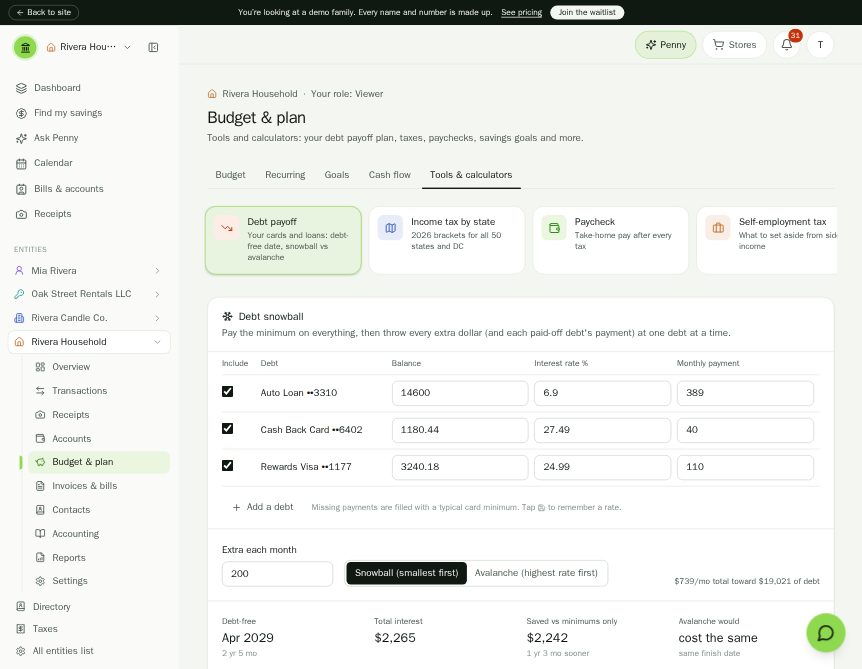
- 1Open Budget & plan → Tools & calculators and scroll to Emergency fund to see what 3 and 6 months would be.
- 2Then open Budget & plan → Goals, add an emergency fund goal with that target and link it to the savings account that holds it.
Quick quiz
3 questions
Go deeper
- The Total Money Makeover, Dave RamseyWhere the $1,000 starter fund, then a full fund, comes from.
- Get Good with Money, Tiffany AlicheA friendly plan for building a savings cushion step by step.
Track this automatically in Stackyard
Connect your accounts once and Penny watches for this every time your banks sync.
For education only; not financial, tax or legal advice. Store rules, rates and tax figures change; check the source before you act.