Lesson F.3
Giving first
Tithing as a starting point; joyful, planned giving. 5 min read
The big ideaPlan your giving first, before the month spends it, and give freely rather than out of pressure.
Many Christians see giving as worship: a way to say thank you and to trust God with the rest. Giving first means it comes off the top of the plan, not out of whatever is left.
The tithe as a starting point
The tithe means a tenth. It runs through the Old Testament (for example Leviticus 27:30 and Malachi 3:10). Christians differ on whether it’s required today. Many treat 10% as a healthy starting point, and some give more.
Example · 2 Corinthians 9:7 (KJV)
“Every man according as he purposeth in his heart, so let him give; not grudgingly, or of necessity: for God loveth a cheerful giver.”
Two words stand out: “purposeth” and “cheerful.” Giving is meant to be decided ahead of time, and given gladly. Randy Alcorn’s The Treasure Principle argues that giving is a strong remedy for materialism: it loosens money’s grip on us.
Example · The Rivera family
The Riveras bring home $6,400 a month. A tenth would be $640. That felt like too big a jump, so they started at 6%, or $384, and added 1% ($64) every three months. A year later they reached $640 a month, or $7,680 a year, without missing a bill.
- Decide your amount together, in prayer, before the month starts.
- Put Giving at the top of the budget, right after the paycheck lands.
- If 10% isn’t possible yet, start smaller and step up on a schedule.
- Keep a little room for spontaneous giving when a need comes up.
- Keep receipts. For 2026, joint filers who don’t itemize may deduct up to $2,000 of cash gifts to qualifying charities ($1,000 for other filers). Any single gift of $250 or more needs a written acknowledgment from the charity.
Giving isn’t a way to get rich, and this track makes no such promise. Give out of love and gratitude, not as an investment that should pay you back.
Key notes
- Plan giving first, not from leftovers.
- The tithe (10%) is a common starting point; Christians differ on whether it’s required.
- Give with purpose and cheerfully, not under pressure (2 Corinthians 9:7).
- Can’t reach 10% yet? Start smaller and step up 1% at a time.
- Keep giving receipts; for 2026, non-itemizers can deduct some cash gifts (checked November 2026).
Do it in the app
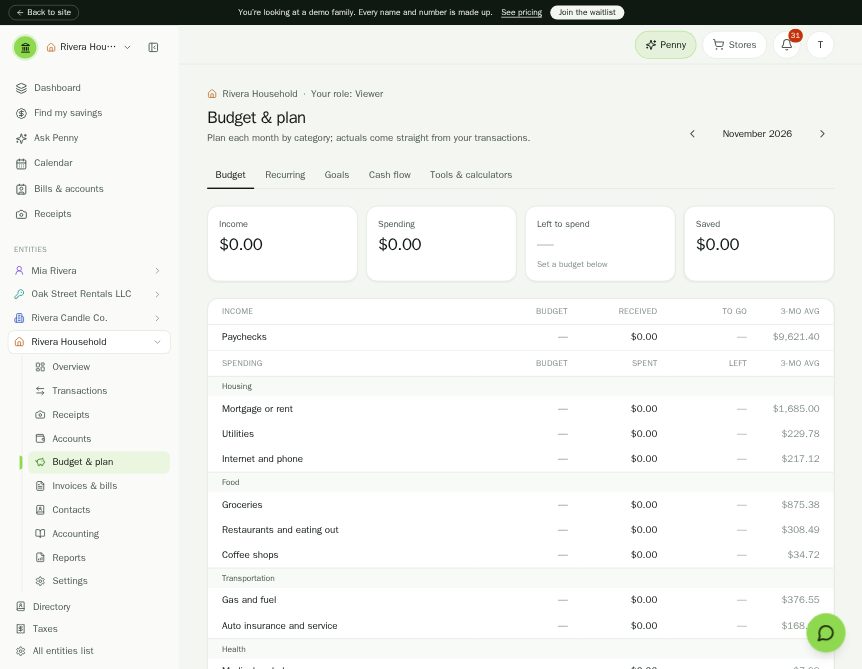
Make Giving the first line of your budget
- 1Open a giving transaction and pick “+ New category or sub-category…” in its category list to add a Giving category if you don’t have one (sub-categories like Church or Missions work too).
- 2Open Budget & plan, pick the month and set the Giving line first, then fill in the rest.
- 3Each row shows budgeted, actual and what’s left, so you can see your giving happen as planned.
Quick quiz
3 questions
Go deeper
- The Treasure Principle, Randy AlcornA short, readable book on why giving brings joy and frees us from materialism.
- IRS Topic 506: Charitable contributionsFree official rules on deducting gifts and the records you need.
Track this automatically in Stackyard
Connect your accounts once and Penny watches for this every time your banks sync.
For education only; not financial, tax or legal advice. Store rules, rates and tax figures change; check the source before you act.